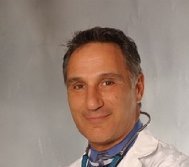
Dr. Gerald Chodak

'Winning the Battle Against Prostate Cancer'

Every day, studies are being done to help fight prostate cancer. The author of Winning the Battle Against Prostate Cancer tells us about the controversies surrounding the testing and treatment of the disease on Chicago Tonight at 7:00 pm.

In the book, Dr. Gerald Chodak outlines the pros and cons of all reasonable treatment options for prostate cancer, recognizing that men and their families need more than just the facts; they are concerned not only with their survival but also what life will be like after treatment.

The book offers empathetic insight into the impact of the disease on daily activities, so that patients and family members have a clear understanding of what lies ahead and options that are available should complications arise.

Meet Dr. Chodak in the video below.


In the following video, Dr. Chodak discusses treatment options for localized prostate cancer.

For more information about Dr. Chodak and his book, and to view more videos about prostate cancer, visit the links below.


Comments

Neighborhood/City: 
Andersonville (Chicago)

Chodak, in the tradition of Western medicine, spoke little of causes and prevention of prostate cancer, and Ponce did little to press him on it, even though it has become quite well documented that the Western diet rich in animal products is a key culprit in prostate cancer, particularly dairy products. The absence of prostate cancer in populations that consume little or no animal products prompted a whole school of nutritional thought on the subject that is now emerging, yet with still timid support from the mainstream media and the status quo medical community. Americans deserve better healthcare and better information than they are getting from both.

Neighborhood/City: 
Crystal Lake (Suburbs)

I was watching the Doctor being last night. Near the end of the interview he mention
two medication that could be taken for an enlarged prostrate. I was unable to get the names of the medication he mention, I been taken some that my doctor prescribe, I was
thinking about having them changed, after hearing DR. Chodak, I would give the ones
he mention. I hope I can get the names. Thank You Robert.

Neighborhood/City: 
Western Springs (Suburbs)

There are quite a few new, more benign treatments for early stage prostate cancer being researched (a number of which are in clinical trials) that hold some promise for reducing (even eliminating) the dreaded side effects of impotence, urinary incontinence, and rectal incontinence unfortunately too common with current "cut" or "burn" therapies (that is, surgery or radiation). Why no mention by Dr. Chodak of some of the most promising new therapies on the horizon (focal photodynamic ablation, for example, that uses light-activated destruction of vascular supply to cancerous cells). Mentioning the burgeoning research examining such alternative therapies to current prevalent surgical and radiation treatments would have provided an additional benefit to undertaking a watchful waiting (now termed "active surveillance") stance by the significant number of patients diagnosed with early stage "indolent" prostate cancer. Johns Hopkins physicians have established a set of criteria to determine which patients likely have indolent cancer and therefore appropriate for active surveillance (criteria include thresholds of PSA level, % free PSA, % of cancer cells in biopsy samples, Gleason scoring, etc. that would indicate a change in aggressivity). Delaying treatment for 5 to 10 years via active surveillance (which does involve close monitoring) would allow many prostate cancer patients to benefit from new treatment options currently being studied that could prove to be equally efficacious, while also yielding significantly less risk for quality-of-life destroying side effects than now experienced with either conventional surgery or radiation.

Add new comment